LocationSan Francisco, CaliforniaMoscone Center South, 747 Howard Street Marriott Marquis San Francisco, 780 Mission Street
Paper deadlineAugust 1 · 11:59 PM ET
About the workshop
From patterns in data to decisions that matter.
The INFORMS Data Mining Society invites researchers and practitioners to share recent work in data mining, decision analytics, artificial intelligence, machine learning, optimization, and related methodological and applied areas.
Held the day before the 2026 INFORMS Annual Meeting, DMDA brings together theoretical advances and field-tested applications in a focused, in-person setting.
The INFORMS Data Mining Society invites full-paper submissions presenting methodological or applied research in data mining, decision analytics, artificial intelligence, machine learning, optimization, and related fields.
Paper competition
Submitted papers are reviewed for the DMDA Workshop Best Paper Competition in theoretical and applied research tracks. Four finalists will be selected for each track.
Paper format
Maximum of 10 pages total, including abstract, tables, figures, references, appendices, and all other material.
One-inch margins, 11-point font or larger, single-column and single-spaced.
Include a 50-word abstract.
Prepare both a blinded and an unblinded PDF.
Eligibility and review
The award nominee or lead author must be a member of the INFORMS Data Mining Society at the time of the 2026 Annual Meeting.
Submitted work must be neither published nor accepted for publication elsewhere at the time of submission.
An author may serve as lead author on at most one submission per competition track.
Review is double-blind. Four finalists will be selected for each track by external referees.
Topics of interest
Applied Data Analytics
Machine, Deep & Reinforcement Learning
Optimization & Decision Analytics
Simulation
Bayesian Data Analysis
Statistical Inference
Ethics, Privacy, Security & Fairness
Reliability, Quality & Maintenance
Network, Graph & Web Analysis
Longitudinal Data Analysis
Time Series, Spatial & Spatiotemporal Data
Image Processing & Computer Vision
Text Mining & Natural Language Processing
Generative AI & Large Language Models
Federated & Distributed Learning
Important dates
Four dates to keep in view.
01
Paper submission deadline11:59 PM Eastern Time
02
Competition finalists announcedTheoretical and applied research tracks
03
Workshop registration deadlineAnnual Meeting registration is required; early pricing ends September 2, 2026 at 11:59 PM EDT (member $750, nonmember $1,080, student/retired $325-$425)
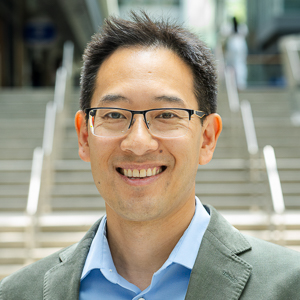
Inverse optimization is increasingly used to estimate unknown parameters in an optimization model based on decision data. However, when such "point estimates" are used to prescribe downstream decisions, the resulting decisions may be of low-quality and misaligned with human intuition, and thus less likely to be adopted. To tackle this challenge, we propose a novel decision recommendation pipeline that learns an uncertainty set for the unknown parameters and then solves a robust optimization model to prescribe new decisions. We show that the suggested decisions can achieve bounded optimality gaps, as evaluated using both the ground-truth parameters and human perceptions. Our method demonstrates strong empirical performance compared to the standard inverse optimization pipeline. Finally, we perform a case study where we apply this new pipeline to provide delivery route recommendations in Toronto, Canada. Our approach achieves a significantly higher delivery path adherence rate than current industry practices without compromising service quality. Moreover, our method provides a better trade-off between absolute and perceived decision quality than baselines under various realistic scenarios, including cases with model mis-specification and data scarcity.
Biography
Timothy Chan is the Associate Vice-President and Vice-Provost, Strategic Initiatives, and a Professor in the department of Mechanical and Industrial Engineering at the University of Toronto. His primary research interests are in operations research, optimization, and applied machine learning, with applications in healthcare, medicine, sustainability, and sports. He holds editorial roles in several journals including Operations Research, Management Science, and M&SOM. Recent honours include the 2026 JJ Berry Smith Doctoral Supervision Award from the University of Toronto, the 2026 CORS Award of Merit, the 2026 Innovative Application in Analytics Award from the INFORMS Analytics Society, the 2025 CORS Practice Prize, and finalist for the 2025 INFORMS Wagner Prize. Professor Chan received his B.Sc. in Applied Mathematics from UBC and his Ph.D. in Operations Research from MIT. Before coming to Toronto, he was an Associate in the Chicago office of McKinsey and Company.
Weijie Su
University of Pennsylvania
October 31 · 2:30-3:30 p.m. PDT
Alignment in Large Language Models: Statistical and Game-Theoretic Perspectives
Abstract
Large language models (LLMs) are predominantly aligned with human preferences through reinforcement learning from human feedback (RLHF). In this talk, we explore the theoretical foundations of LLM alignment through the intertwined lenses of statistics and game theory. First, we show how the current formulation of RLHF induces a systematic bias we call preference collapse, and how this can be mitigated by introducing a tailored regularization term into the reward function. Next, we expose a fundamental bottleneck of reward-based alignment, demonstrating that cyclic human preferences cannot be faithfully represented by scalar reward models such as the Bradley-Terry model. More precisely, we establish that such cyclic inconsistencies give rise to a lower bound on the approximation error of any scalar reward fitting. Shifting to a game-theoretic perspective, we focus on Nash learning from human feedback and establish several social choice desiderata for this approach to alignment, including the preservation of preference diversity through the emergence of mixed strategies. Finally, we show that the zero-sum game approach generally cannot perfectly match a target preference distribution as a unique Nash equilibrium.
Biography
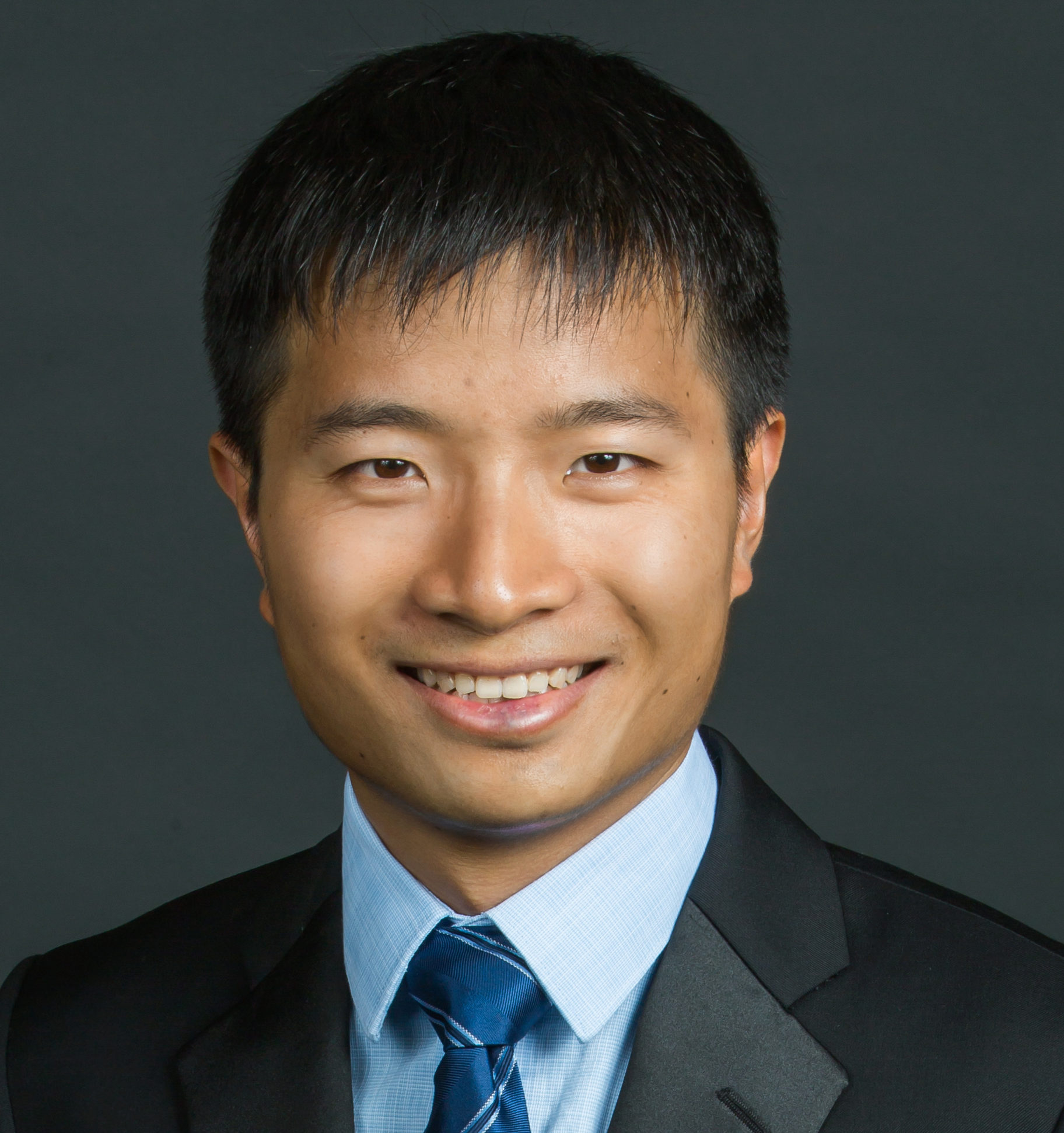
Weijie Su is a Professor of Statistics and Data Science at the Wharton School of the University of Pennsylvania, where he co-directs Penn Research in Machine Learning. His research examines the mathematical and statistical foundations of artificial intelligence, including large language models, privacy-preserving data analysis, high-dimensional inference, and optimization. He earned his Ph.D. in Statistics at Stanford University in 2016 and his bachelor's degree in Mathematics at Peking University in 2011. His honors include the 2026 COPSS Presidents' Award, the 2022 SIAM Early Career Prize in Data Science, the 2022 IMS Peter Gavin Hall Early Career Prize, a Sloan Research Fellowship, and an NSF CAREER Award. He is a Fellow of the Institute of Mathematical Statistics and a founding co-editor of Statistical Learning and Data Science.
INFORMS 2026 Data Mining Society Data Challenge
Forecasting Infrastructure Resilience Under Extreme Weather.
Participants will develop spatiotemporal forecasting models using real-world power-outage and weather data to predict county-level outage severity during successive extreme-weather events.
The competition is open to currently enrolled undergraduate and graduate students and postdoctoral researchers, with teams of up to four members. Please share this opportunity with interested students, postdoctoral researchers, and colleagues.
FocusSpatiotemporal outage forecastingParticipantsStudents and postdocs; teams up to fourRegistration deadlineAugust 31, 2026 (AOE)Submission deadlineSeptember 25, 2026 (AOE)
Participant information
Eligibility
Open to currently enrolled undergraduate and graduate students and postdoctoral researchers. Teams may include up to four members, and interdisciplinary participation is strongly encouraged.
Dataset
Hourly county-level outage data from PowerOutage.com are combined with NOAA URMA and ERA5 weather fields across 302 counties from March 11-19, 2026.
Data access
Registered participants receive an NDA. The Google Drive data package is released after the signed NDA is returned.
Prediction task
Forecast hourly outage severity index (OSI) for 63 held-out counties over March 14-19 at t+1h, t+6h, t+24h, and t+48h horizons.
Submission package
Submit the prediction file, reproducible Python or R code, and a written report of no more than 6 pages excluding references.
Evaluation
Finalists are selected using predictive performance and the rigor, novelty, and clarity of the modeling approach. Code review is part of evaluation.
Prizes
The top three finalist teams present in a special DMDA Workshop session in San Francisco. Prizes are $700, $400, and $250; at least one member from each finalist team must be registered for the DMDA workshop to be eligible for prizes and presentation.
Challenge timeline
July 2026
Competition opens
Data and templates available after registration and NDA completion.
August 31, 2026
Registration deadline
Anywhere on Earth (AOE).
September 25, 2026
Submission deadline
Predictions, code, and report due Anywhere on Earth (AOE).
October 5, 2026
Finalist notification
Finalist teams are invited to present in San Francisco.